Redesigned legal documents + App for court staff + App for youth Clients
Streamlining Justice for Children
Organization
Parramatta
Children's Court
ROLE
UX/UI Designer + Researcher
EXPERTISE
UX/UI Design
User Research
Timeframe
April 2024 - ONGOING
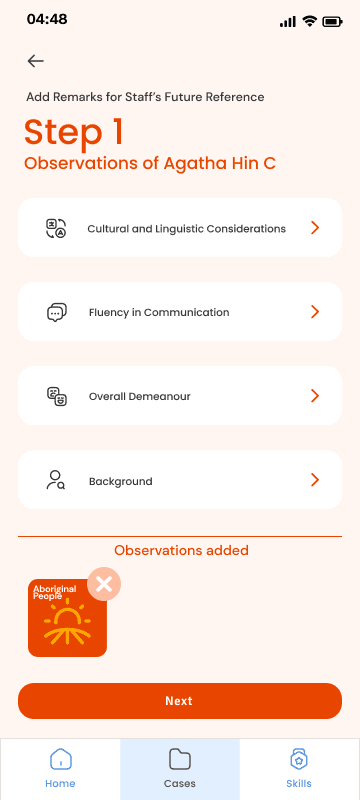
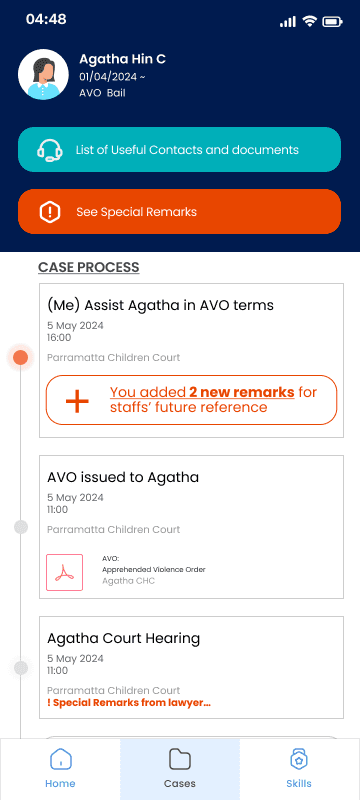
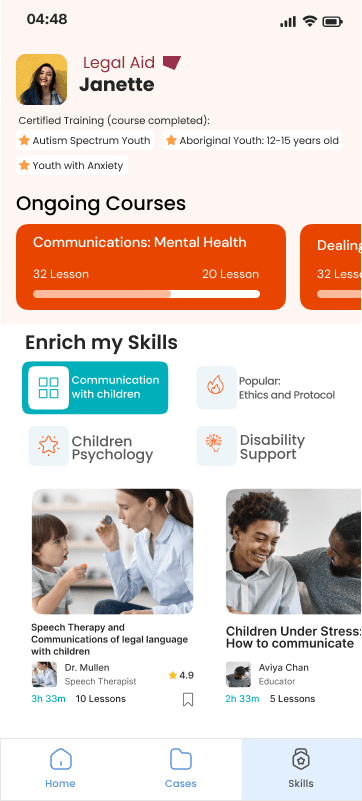
For my Master's capstone project, I designed the YouthCases Aid - Staff app as part of a three-part solution to improve communication, collaboration, and understanding within the NSW Children’s Court system.
The Solution
Redesigned legal documents
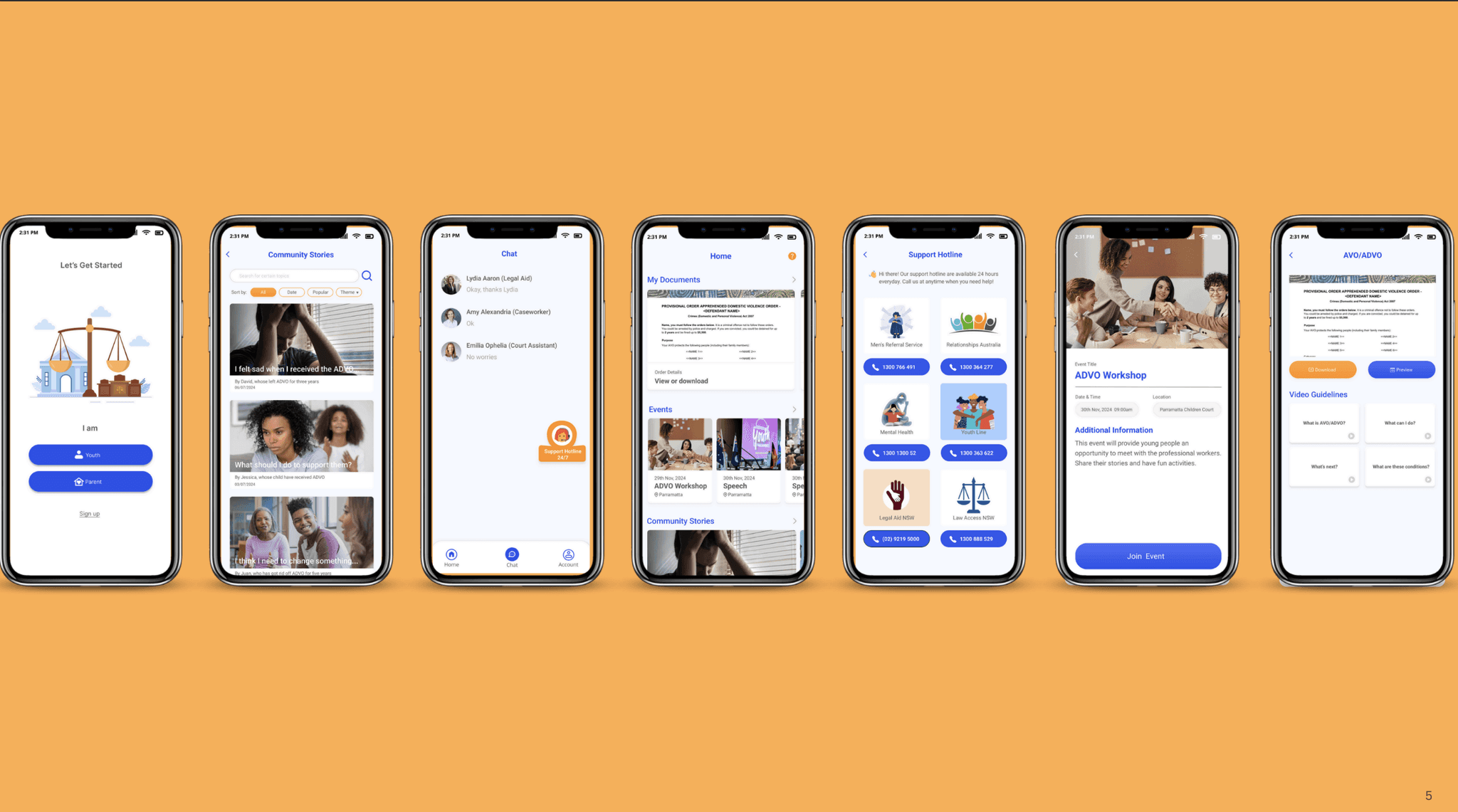
YouthCases Aid - Kids (an app for youth offenders)
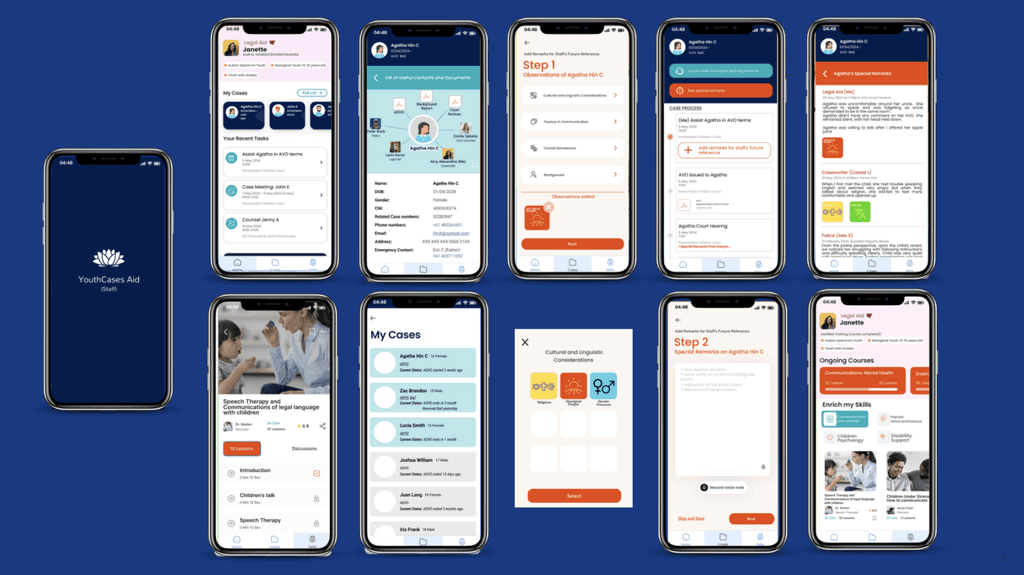
YouthCases Aid - Staff (an app for court staff)
I served as the sole UX/UI Designer and Researcher for the Staff App while contributing to overall project coordination.
In the NSW Children's Court, youths often struggle to understand legal orders like ADVOs, which protect against domestic violence by restricting the defendant's behavior.
The current way of explaining these orders is complex and confusing.
Challenges
Youth offenders often struggle to understand legal orders (e.g., ADVOs), hindered by:
Complex legal terminology
Language barriers
Learning disabilities and trauma
Court staff face challenges like:
Inefficient task allocation
Miscommunication among departments
Lack of tools for cross-departmental collaboration
Outdated training resources
Goal
To improve communication between youth offenders and staff while fostering collaboration and enabling better task management. This ensures a smoother process and prioritizes youth rehabilitation
Target Audience
Government staff assisting in court cases
Youth offenders under 18
Research Process
The project's research goal was to understand how court staff communicate legal orders to kids both inside and outside the children's court setting, identifying communication barriers and enhancers. We aimed to gain insights into the general experiences of both staff and children within the judicial system, pinpointing any challenges or gaps in the process.
Additionally, we sought to uncover power tensions between staff and young offenders, as well as among different departments.
Research Goals
Identify barriers in legal communication with youth.
Examine how staff coordinate across departments.
Understand power dynamics between legal staff, youth, and stakeholders.
Secondary Research
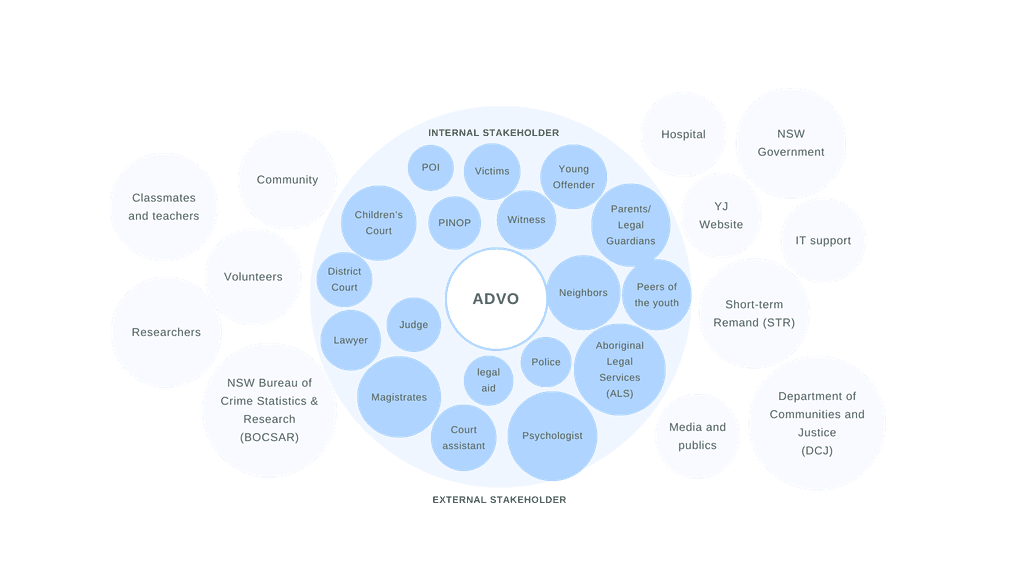
Mapped stakeholders involved in court proceedings.
Studied existing legal communication challenges and systemic inefficiencies.
Primary Research
Participants: Over 12, including legal staff, speech pathologists, and caseworkers.
Methods:
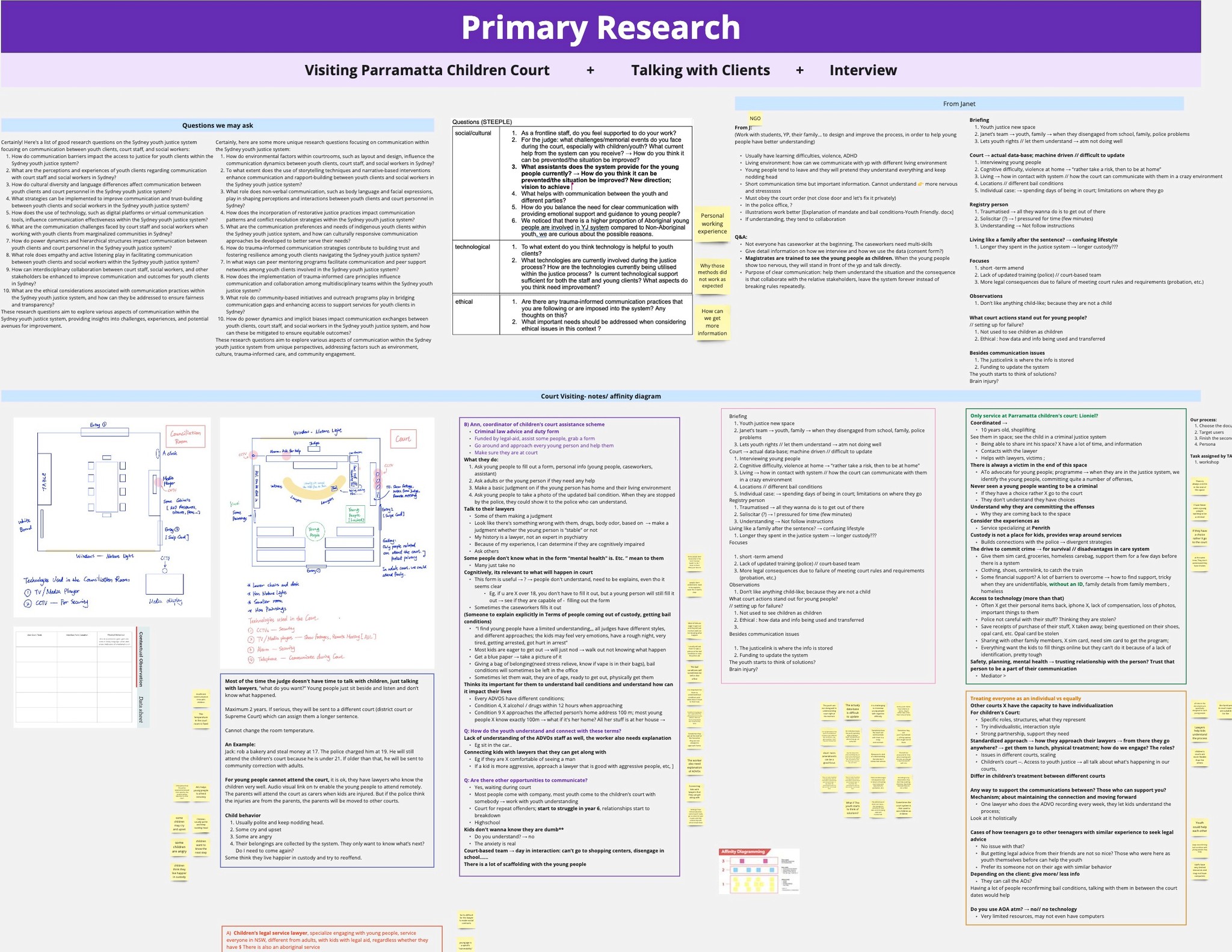
Group Interviews with Parramatta Children’s Court staff for collective insights.
Individual Interviews to uncover deeper, personal challenges and preferences.
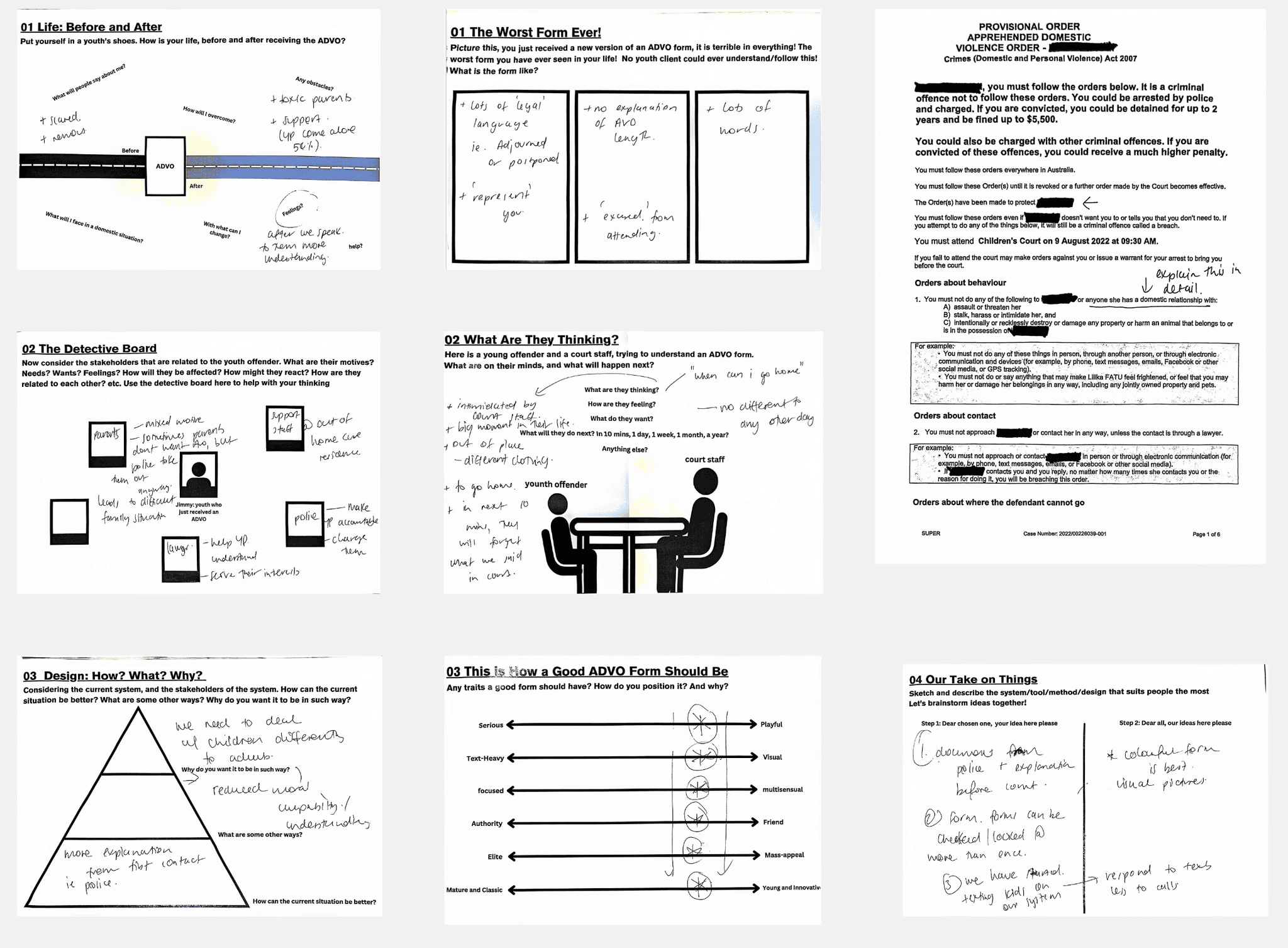
Workshops to gather collaborative input and refine ideas.
Feedback Sessions with legal experts and speech pathologists for solution validation.
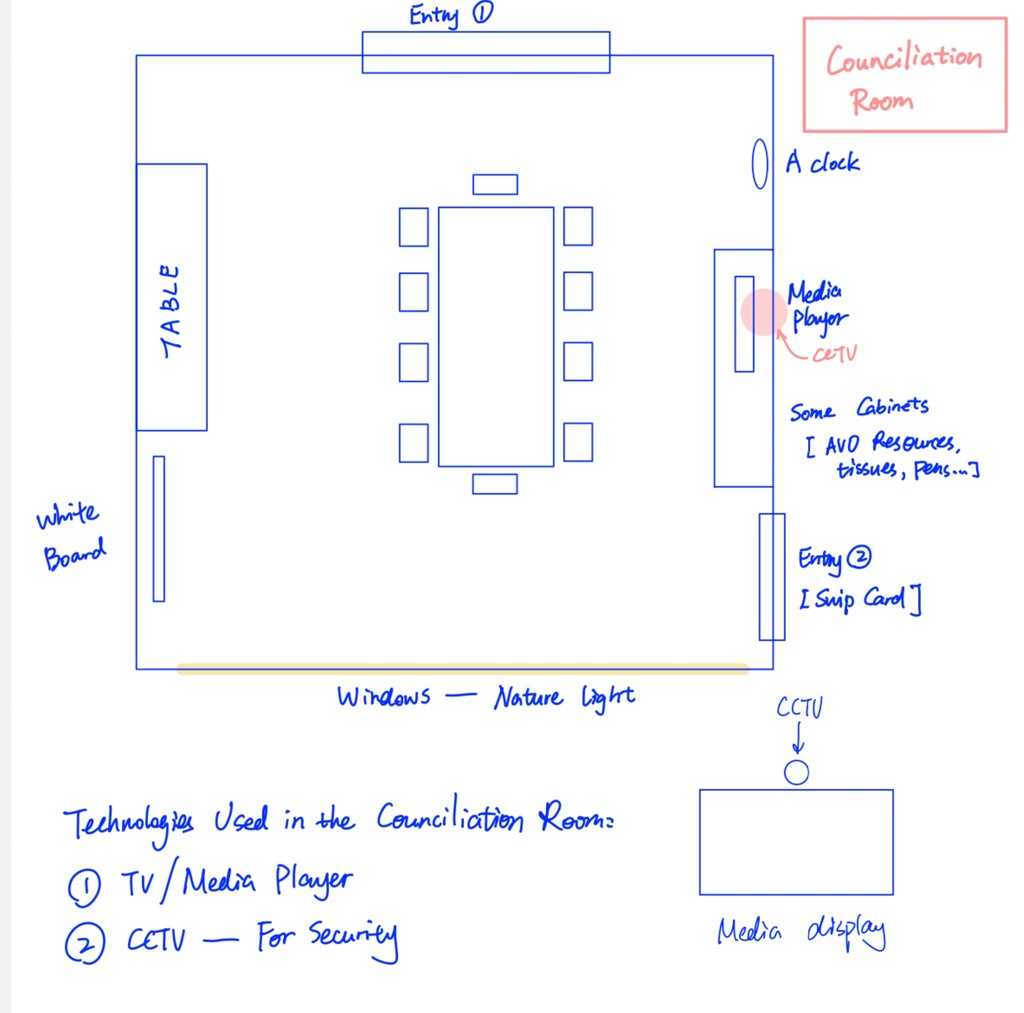
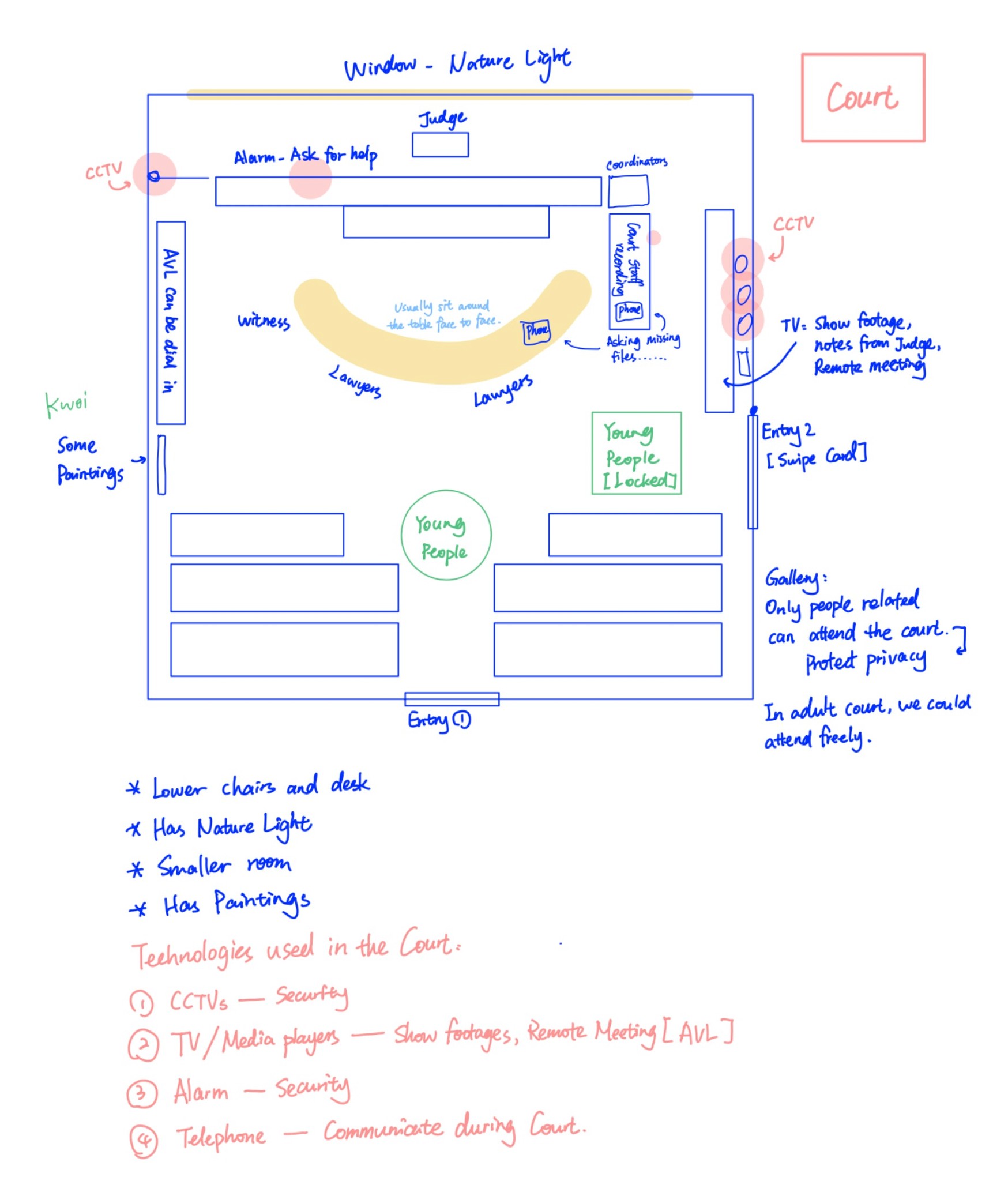
Field Studies at Parramatta Children’s Court for firsthand observation and contextual understanding.
(no pictures allowed, so we made a quick sketch on the courtroom’s layout)(I even get to sit on the judge’s seat! :D )
Tools and Approaches
Design Probes: Encouraged participants to explore new perspectives and think creatively.
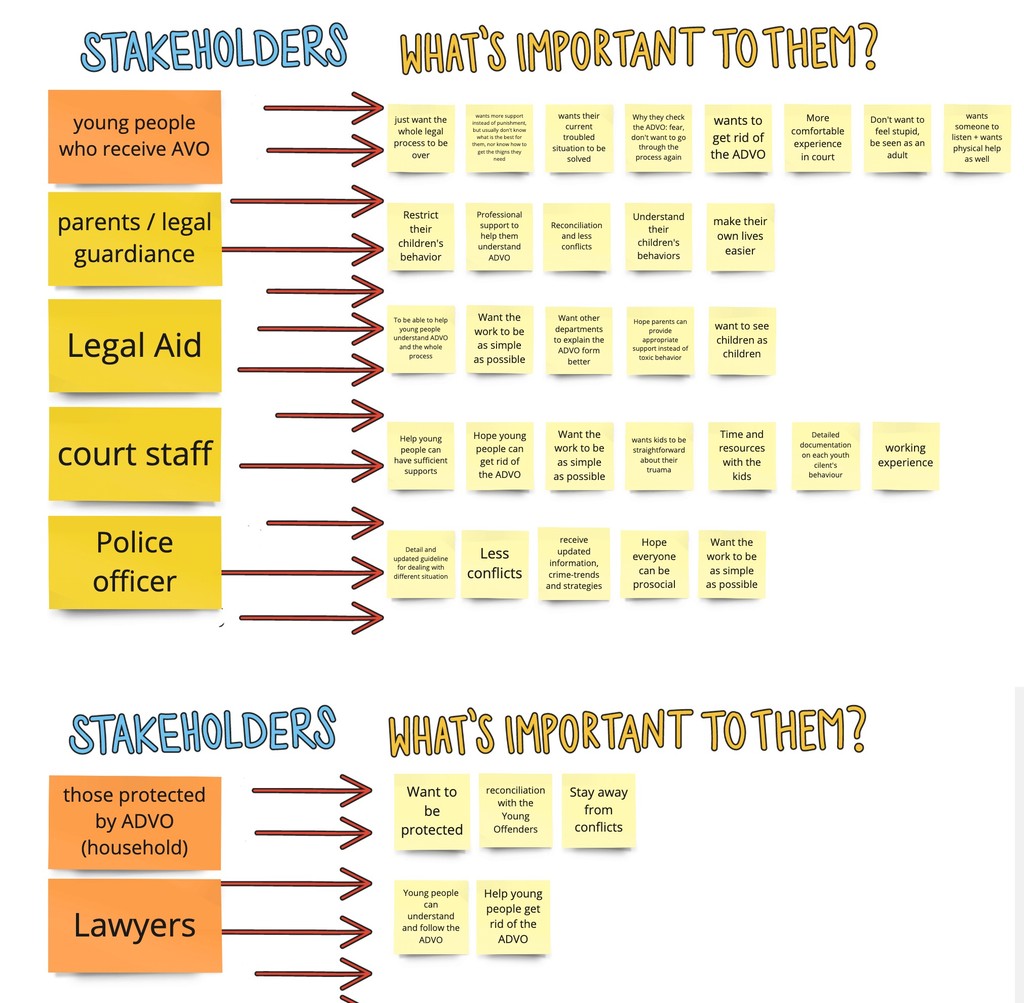
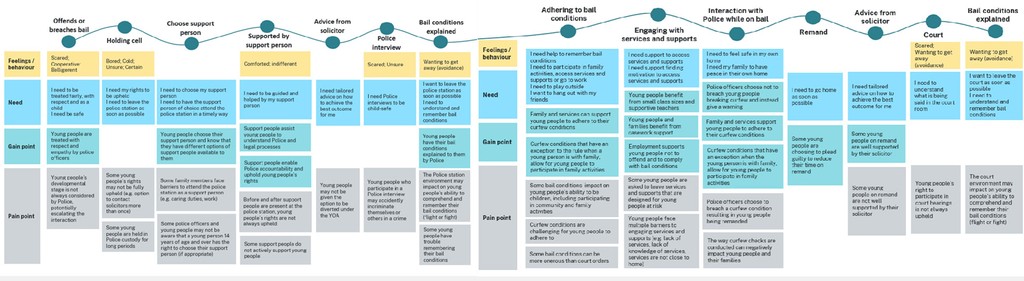
Mind Mapping and Journey Mapping: Organized insights and visualized processes.
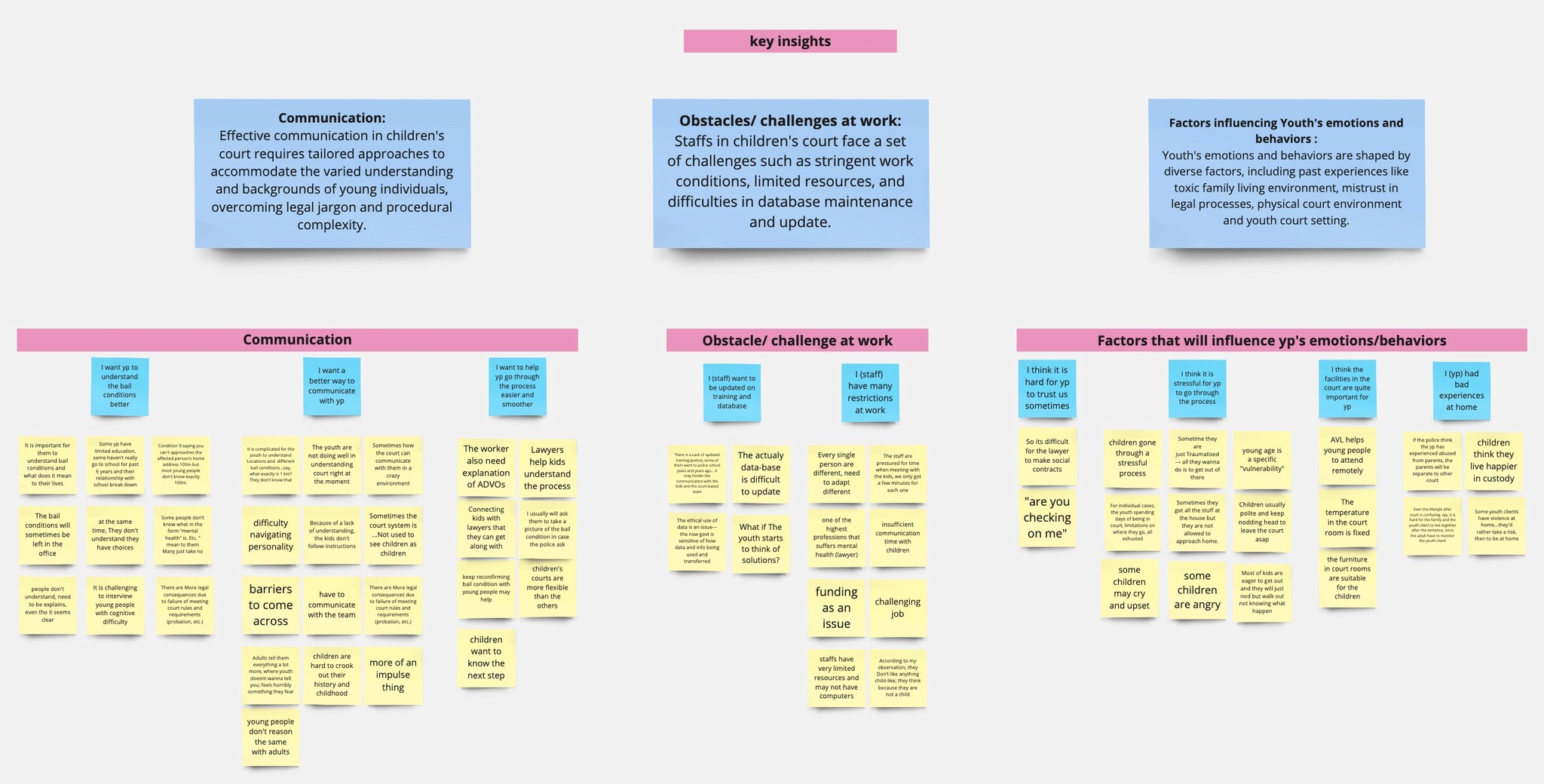
Affinity Diagramming: Identified patterns and pain points.
Responsible Innovation Frameworks: Ensured holistic solutions that consider human, environmental, and ethical values.
User Personas
Problems
❌ Legal documents are overly complex and difficult for youth to understand.
❌ Court staff lack efficient tools for cross-departmental communication.
❌ Youth struggle with comprehension due to language barriers, trauma, and learning disabilities.
❌ Outdated staff training leads to inconsistent case handling.
❌ Task allocation inefficiencies reduce effectiveness in supporting youth.
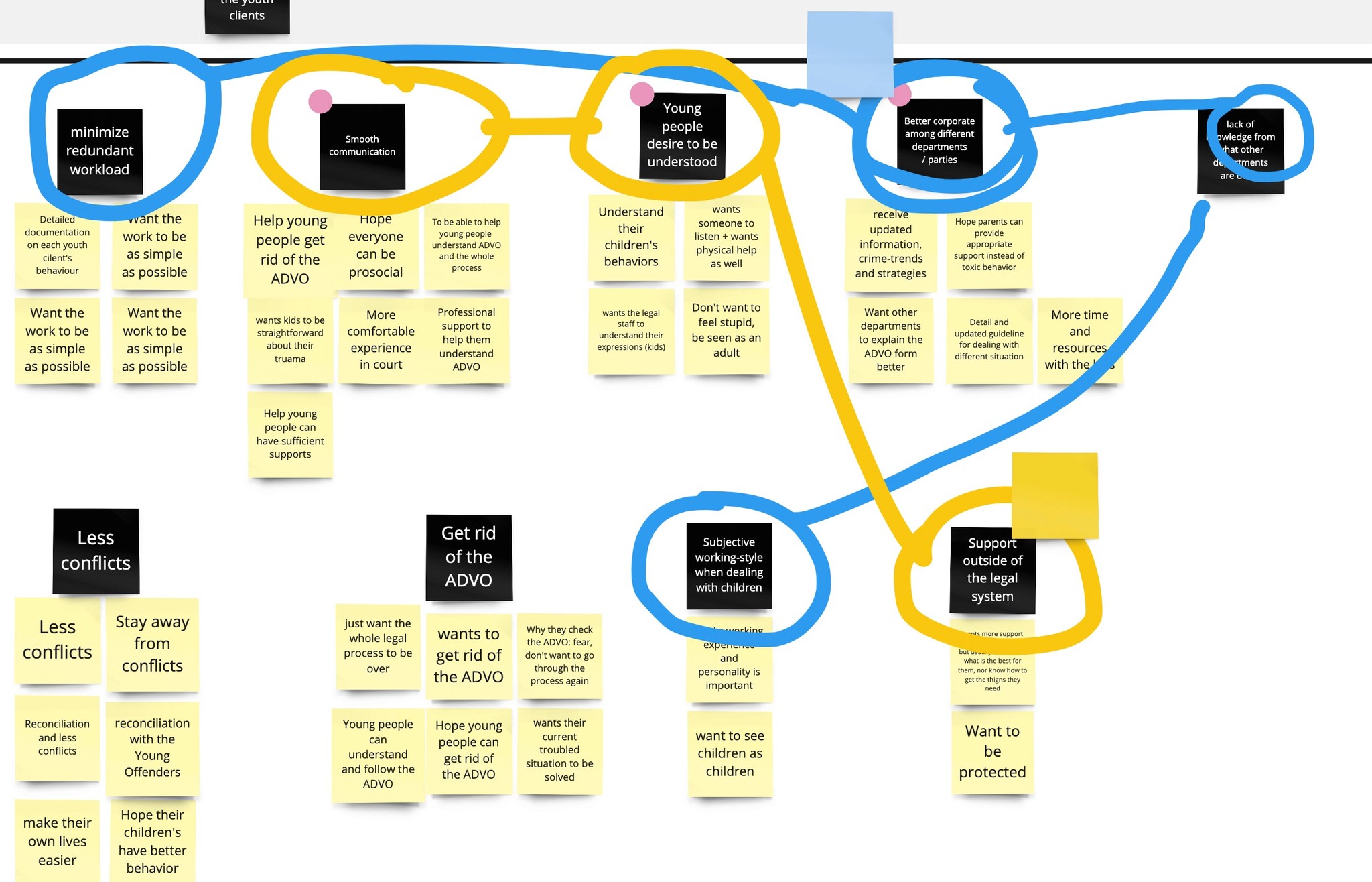
Reframing the Problem
Shifting perspectives to uncover new insights and opportunities
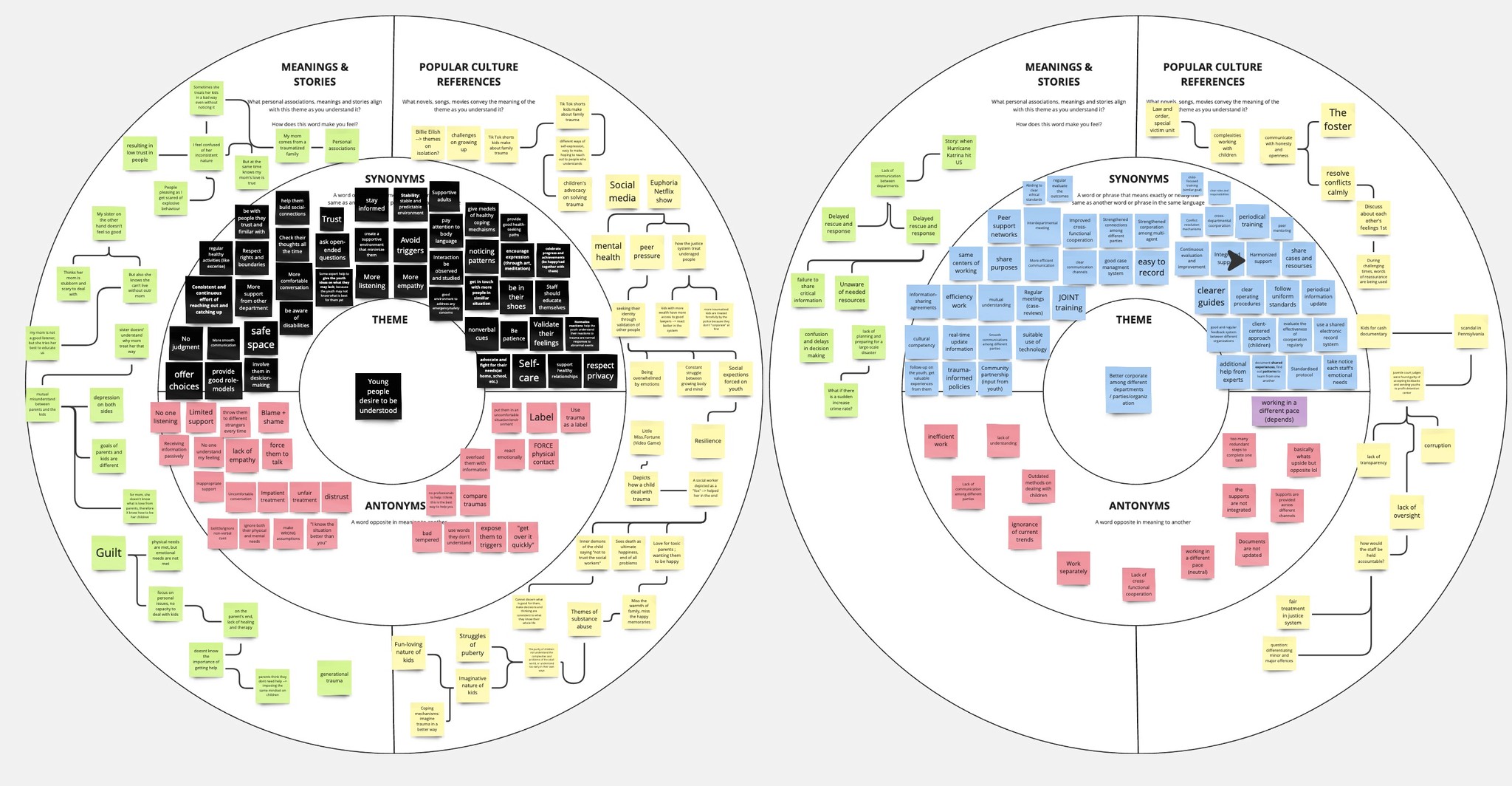
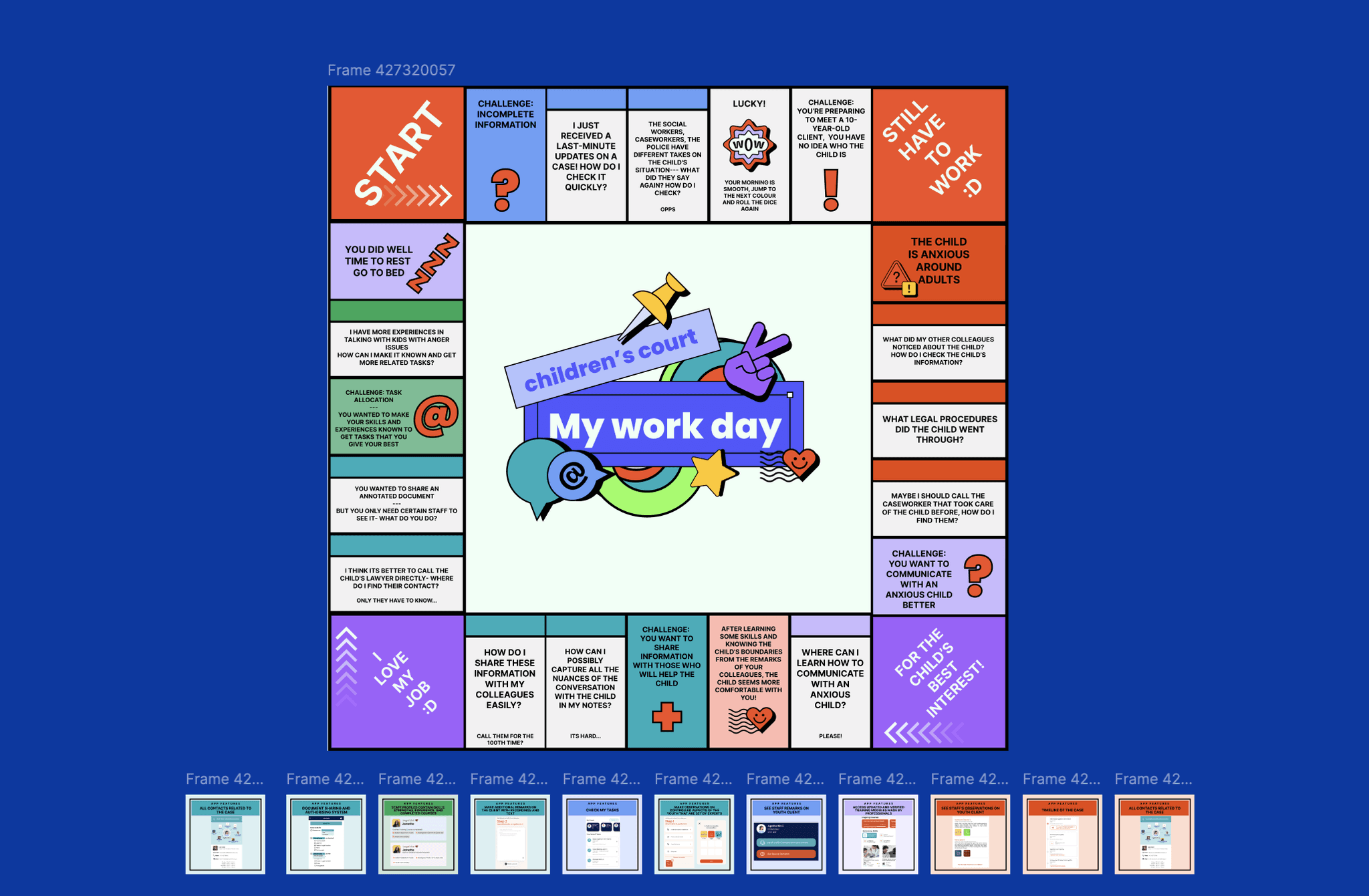
Thematic Brainstorm
Inspiration from popular culture
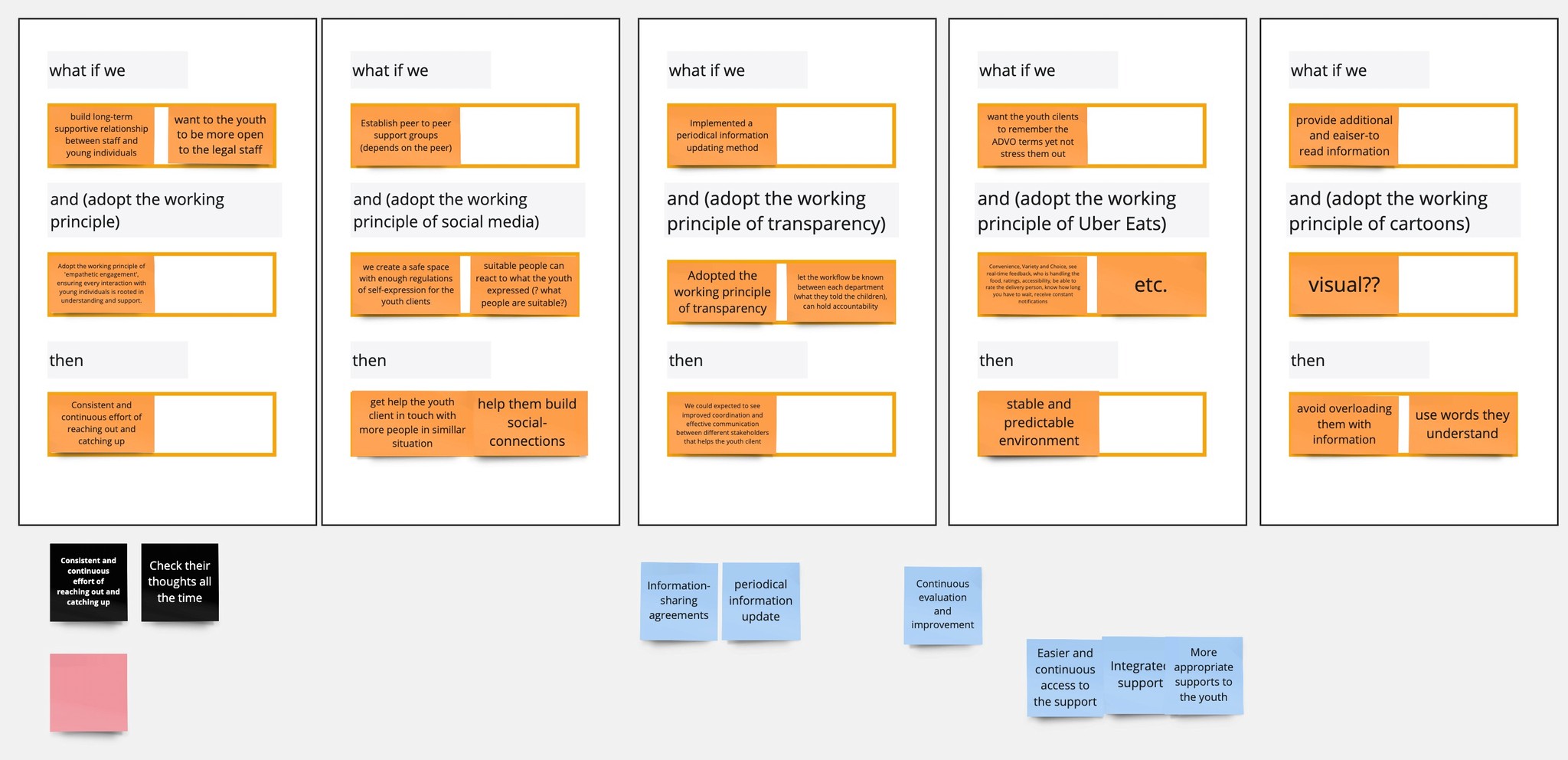
How Might We...?
Exploration of diverse possibilities and unconventional approaches
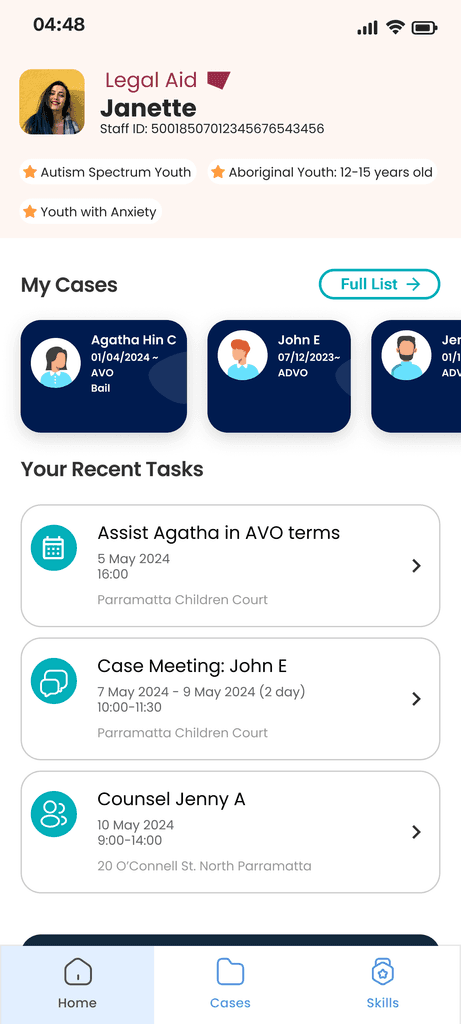
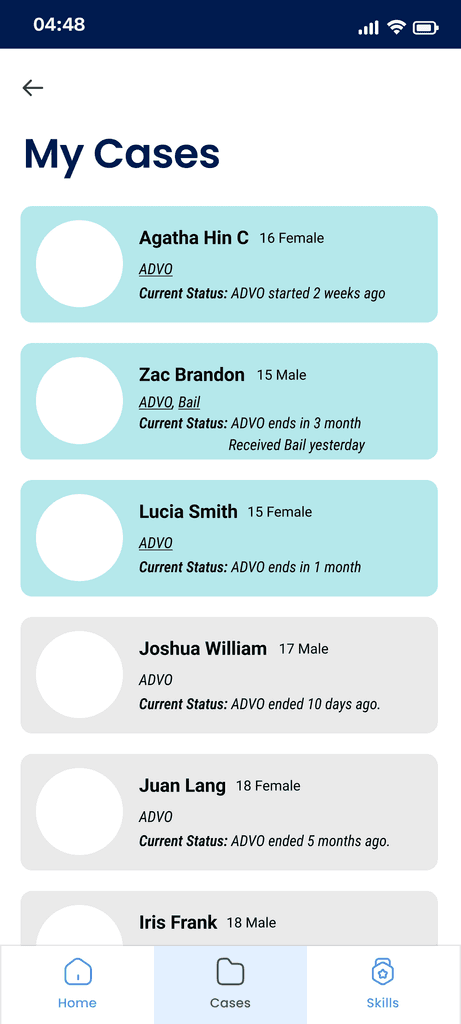
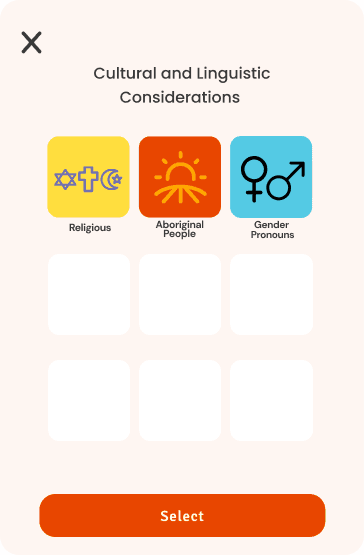
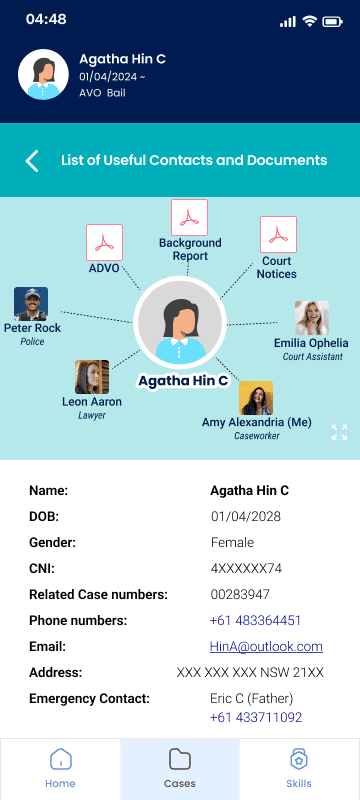
YouthCases Aid - Staff App is a transformative solution designed to revolutionize operations within the NSW Children’s Court system.
By addressing critical challenges like cross-department miscommunication, inefficient task allocation, and outdated training processes, the app empowers government staff with tools to streamline workflows, enhance collaboration, and prioritize the child’s best interests.
It integrates real-time task management, centralized training, and intuitive communication features, setting a new standard for court operations. Positioned as both a strategic intervention and a user-centric design solution, this app has been recognized for its potential to drive meaningful change, making it a game-changer in judicial collaboration and youth rehabilitation.
✅ Streamlined Case Collaboration
Staff can quickly access case details and communicate across departments in real time.
✅ Role-Based Access Controls
Secure, authorized access to sensitive documents and case information.
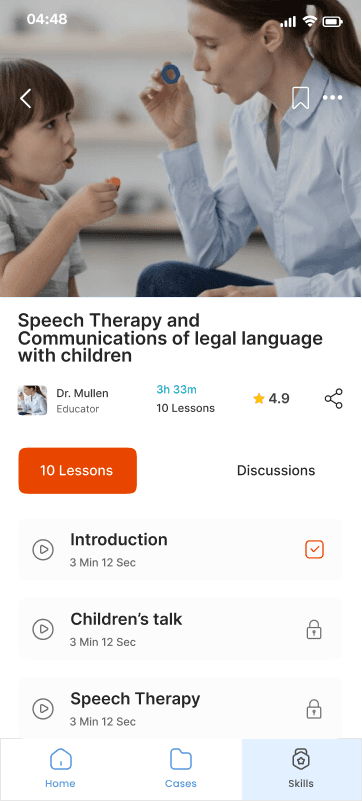
✅ Training Hub
No more outdated resources; staff can access regularly updated best practices.
✅ Enhanced Communication Tools
Staff can quickly access case details and communicate across departments in real time.
Instantly retrieve contact details for relevant team members.
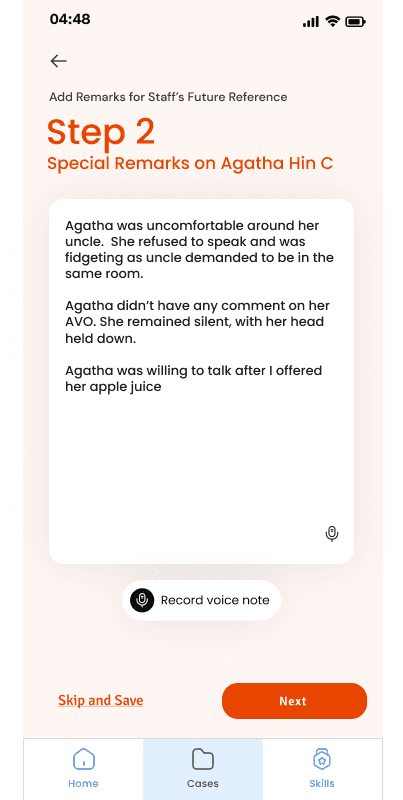
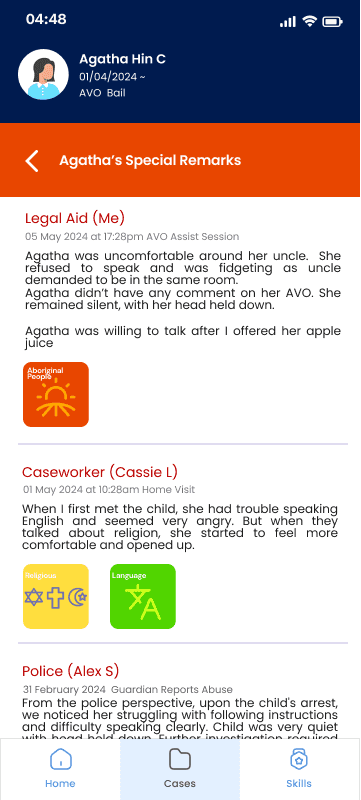
✅ Pre-Session Briefing Tools
Staff can review previous notes to better understand a child's background and needs before engagement.

Challenges and Learnings
🚧 Balancing the Needs of Youth & Legal Staff
Designing for both children and legal professionals required careful trade-offs in simplicity vs. comprehensiveness.
🚧 Legal Design Complexity
Legal concepts are difficult to simplify without losing accuracy. Iterative testing helped strike the right balance.
🚧 Information Overload in Reports
Early client reports were too text-heavy. Prioritizing clarity and scannability improved engagement.
🎯 Long-Term Impact Over Quick Fixes
By addressing systemic gaps and solving the root causes, YouthCases Aid has the potential to reshape children’s court operations for years to come.
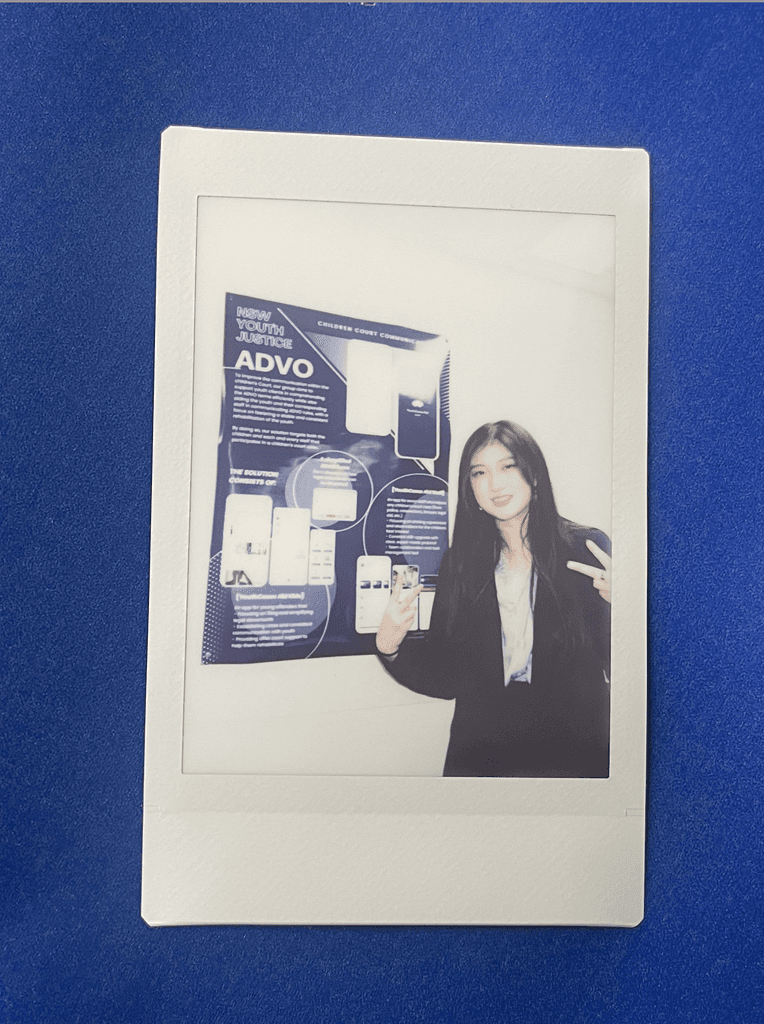
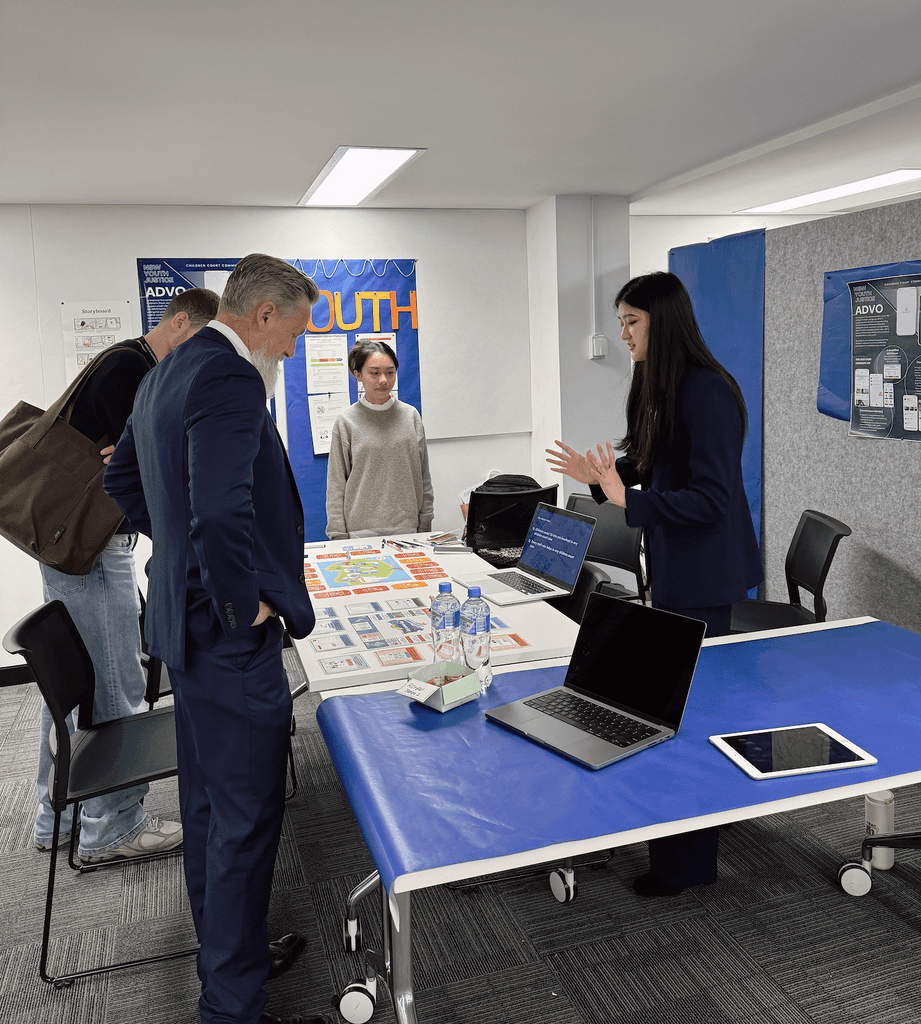
On the big day, around 10 clients from the Children's Court came to see our product....
🚀 The Staff App received an invitation of collaboration and further development!
The initial deployment has shown promising results in improving communication and understanding among staff and youth. Future updates will focus on refining features based on user feedback and expanding the app's capabilities to further support youth rehabilitation.
This project was an invaluable experience in designing for high-stakes, real-world challenges. It reinforced the power of human-centered design in legal innovation, proving that thoughtful UX can bridge gaps, improve communication, and create lasting change in the justice system.